
Vertigo Treatment Brisbane
Targeted Physio for Vertigo – Expert Help to Overcome Dizziness and Balance Disorders
Conveniently located in Brisbane
2/ 296 Oxley Road, Graceville, QLD, 4075
Mon-Thur: 7:30am to 7:00pm, Fri: 7:30am to 6:00pm & Sat: 9:00am to 2:00pm
Free parking available for clients
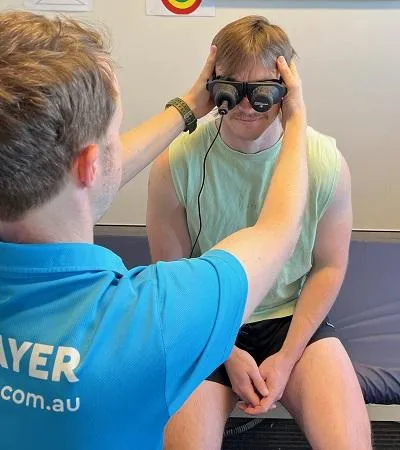
Don’t let dizziness hold you back. Our team can help diagnose the cause of your vertigo and get you back to feeling your best
If you’re experiencing dizzy spells or vertigo it’s likely you may be suffering from benign paroxysmal positional vertigo (BPPV). It is a type of dizziness that is caused by an issue with the semi-circular canals in your inner ear. It is the most common cause of dizziness in adults, and responds well to physiotherapy management. Treatment for vertigo needs to be concentrated on the side that is causing the dizziness. Vertigo Physiotherapy is an effective treatment for Vertigo.
What is vertigo?
Vertigo is a sensation of spinning or movement when you are not actually moving. People often describe it as feeling like:
You are spinning
The room around you is spinning.
It’s not the same as simple lightheadedness or faintness. Vertigo is usually a symptom of an underlying issue with the inner ear (vestibular system) or, less commonly, with parts of the brain that control balance.
Sometimes Vertigo can occur for no apparent reason and then go away for no apparent reason without any symptoms being felt at all for some time. We don’t know the reason for this, but when this happens it is then termed intermittent bppv.
Other names for BPPV can be postural vertigo or top shelf vertigo. Top shelf vertigo is used when dizziness occurs when looking up.
Vestibular Physiotherapy Rehabilitation
Vertigo Physiotherapy treatment of BPPV involves assessment to identify which canal or canals are affected, followed by a specific sequence of movements that help return the crystals (otoconia) to their correct place in the vestibular apparatus so that they no longer cause dizziness. This is known as vestibular rehabilitation therapy.
Symptoms typically resolve relatively quickly, usually requiring 1-3 treatments to full resolution.
It is common to feel a bit washed out and unsteady after treatment so we recommended you have someone to transport you home after treatment.
What is BPPV?
Benign paroxysmal positional vertigo, or BPPV, is a condition that presents in the inner-ear, typically triggered by changes in position of the head or body. Often, these symptoms will only last for a moment or two but if left untreated will continue to return. Common positions or actions that can bring about these symptoms include rolling in bed, getting in or out of bed, or even simply getting up from a chair.
As well as dizziness or spinning sensations, patients may also experience nausea, vomiting, or be unsteady on their feet. Neck pain and stiffness, headaches, and jaw pain can also be related to either the onset or ongoing effects of BPPV. Unfortunately, the cause of BPPV is not fully understood however we do know that it usually occurs after a bout of sickness that creates swelling in the ear canals or due to an event that triggers motion sickness (e.g., being on a boat). Other factors that can increase your risk of getting BPPV include family history, hormonal changes, previous history, reduced hearing, increased ringing in the ears (i.e., tinnitus) or recent ear infection.
BPPV is a condition that affects the otoconia, or “ear rocks”, in the semicircular canals in the inner ear. Normal function of the semicircular canals is where the ear rocks move through the semicircular canals to stimulate cells, which then send information to our brain and body to help detect where we are in space. In BPPV, the ear rocks do not move properly in the canals and we therefore get conflicting messages that get sent to the brain and body, hence triggering dizziness and spinning symptoms.
Our physiotherapists are well trained at assessing and treating BPPV. Assessment is crucial to ensure that the patient is indeed experiencing BPPV, or if their symptoms are due to something else (which may require medical attention). Assessment usually starts by checking neck and eye movements to ensure that the neck and visual system is not causing any symptoms. Provided they are clear, we then move to specific BPPV tests that position the semicircular canals (horizontal, anterior and posterior in each ear) in a way that can reproduce dizziness and spinning symptoms if that specific canal is the affected one. If one of these tests is positive, then treatment focuses on a manoeuvre that helps to get the ear rocks moving normally in that canal. Treatment concludes with some advice about positions to avoid whilst your symptoms are settling, as well as a few exercises to help further reduce your symptoms and to prevent neck pain (which can occur due to patients not wanting to move their neck when they feel dizzy).
Most patients with BPPV respond positively to the canal repositioning manoeuvres and only require 1-2 treatments. Some patients will require medication to help reduce their dizziness on top of physiotherapy treatment, which can be either be purchased over-the-counter at a pharmacist or for stronger doses can be prescribed by a GP if suitable.
What Causes BPPV?
The semi-circular canals sit in the inner ear and form part of your balance system (vestibular apparatus). They give information about head movement through space. In BPPV, little crystals (called otoconia) escape from part of the vestibular apparatus and float around in the semi-circular canals, giving inaccurate information about head movement which results in dizziness. This dizziness is usually provoked by head movement, particularly rolling in bed and sitting up from lying.
Some people are diagnosed with a form of Meniere’s disease which can give similar symptoms, although Meniere’s disease can last for a few years before the person goes into remission. Those with Meniere’s disease can be left with symptoms of ringing in the ears, which is different from other forms of vertigo and dizziness.
There may be other causes of dizziness and BPPV, which may include inflammation in the inner ear and the balance organs, neck pain or cervical spine disorders. These causes need to be ruled out before treatment can begin.
How do You Know if you Have BPPV?
You may get a sudden episode of vertigo, you may experience sudden dizziness or nausea, moving your head may cause you to get dizzy, or your eyes may go into a flickering, which is called a nystagmus. Even rolling over in bed or just looking up can trigger dizziness or severe vertigo in some cases.
Because dizziness and vertigo are so common, it’s very important to have BPPV diagnosed correctly. At our clinic in Brisbane we have vertigo specialists who can do this, or your GP may use several tests to be able to diagnose the type of Vertigo you have and which side it’s occurring on.
What’s the Difference Between Vertigo and Dizziness?
These are both symptoms and not the names of any disease. Vertigo is just a symptom of BPPV.
Vertigo is actually the symptom of spinning or whirling around that is caused when the little ear rocks get stuck in the balance organs in your inner ear.
Vertigo can also be a symptom of other disorders including neck pain or some abnormalities or disturbances to the vestibular nerve. The vertigo nerve is the nerve that integrates your sensory stimuli and movement so that your brain knows where the body is in space. When your head moves, the labyrinth in your inner ear, which is made up of the canals then transmits the information to the vertigo nerve and the vertigo nerve transmits this information to the brain stem and the cerebellum.
How Many Vertigo Treatments is Enough?
We find that in our clinic a lot of BPPV symptoms have gone away after only two treatments. In the few days following a treatment it’s important that the patient takes good care of themselves to ensure the little ear rocks do not go back into the canal where they were stuck. Preventative methods include:
- Sleeping propped up at a 45 degree angle
- Avoiding sudden movements of the head and neck
- No bending over
- No picking up heavy objects
- No looking up into the sky
What is the best treatment for vertigo?
There are a few methods for treating vertigo. Medications from a doctor such as steroids can reduce inflammation of the inner ear, medication to reduce water buildup can help. We recommend vertigo physiotherapy to remove the blockage.
What triggers vertigo attacks?
Vertigo can be brought on by a variety of things, including sudden movements, inflammation in the inner ear, decreased blood flow to the base of the brain, and others.
If you’re experiencing dizzy spells or vertigo it’s likely you may be suffering from benign paroxysmal positional vertigo (BPPV). It is a type of dizziness that is caused by an issue with the semi-circular canals in your inner ear. It is the most common cause of dizziness in adults, and responds well to physiotherapy management.
Treatment for vertigo needs to be concentrated on the side that is causing the dizziness.
Vertigo Physiotherapy is a safe and effective treatment for Vertigo. Restore your balance and find lasting relief.
Contact our team today!
No referral needed


Follow Us
The Clinic
Common conditions
© Copyright 2026 Vitala Health. All Rights Reserved.
Facebook
Instagram
Youtube