Dry Needling For Pain & Muscular Relief in Brisbane
Reduce pain caused by overuse, poor posture or injury
Conveniently located in Brisbane
2/ 296 Oxley Road, Graceville, QLD, 4075
Mon-Thur: 7:30am to 7:00pm, Fri: 7:30am to 6:00pm & Sat: 9:00am to 2:00pm
Free parking available for clients
What Is Dry Needling and How Does It Work?
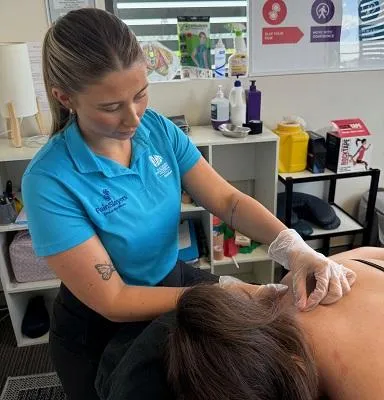
Dry needling is where very fine sterile needles are strategically inserted into tight, sensitive spots in your muscles — often called trigger points, to help release tension, improve blood flow, and help reset the muscle to its normal resting state.
Dry needling therapy is widely used and integrated by physiotherapists in the management of musculoskeletal pain.
The needling techniques we use at our Physio clinic in Brisbane help improve movement, restore muscle function, and support recovery from many common physical conditions.
Dry needling is popular among runners, gym-goers, and athletes looking to recover from sports injuries and stay injury-free. It helps relieve tight muscles, improve flexibility, and support quicker recovery after intense training or sport.
What Conditions Can Dry Needling Help With?
Head, Neck & Jaw
Tension-type and cervicogenic headaches
Neck and shoulder pain or stiffness
TMJ (jaw) tension and facial pain
Chronic muscle tension
Muscle knots and tight bands
Arms & Upper Body
Office-related arm and forearm pain
Tennis elbow and golfer’s elbow
Spine & Core
Lower back pain
Sciatica and piriformis syndrome
Gluteal pain and hip tightness
Frozen shoulder and rotator cuff tightness
Fibromyalgia-related muscle pain
Legs & Feet
Patellofemoral knee pain
Calf strains and shin splints
Hamstring tension and muscle spasms
Achilles tendinopathy
Plantar fasciitis and heel pain
Morton’s neuroma
ITB syndrome
Hip Pain
Is It Safe?
Yes — when performed by trained professionals, dry needling is considered a safe treatment. We use fine, single-use sterile needles, that are expertly placed with precision. The needles are not placed deep so the risk of injury is low.
At Graceville Physio, we follow professional guidelines set by the Australian Physiotherapy Association and state health bodies, so you’re in good hands.
Common questions about Dry Needling
What is the difference between dry needling and acupuncture?
Dry needling focuses on releasing tight muscles by targeting trigger points to release built-up tension in the area. The desired result is to relax and correct muscular issues including spasms, strains and misalignments.
Acupuncture, on the other hand, is part of traditional Chinese medicine and works by stimulating specific points along energy pathways known as meridians.
How long does a session take?
Typically a session and takes around 10–15 minutes, depending on the number of areas being treated.
Can I go back to work or the gym afterwards?
Yes, but it’s best to avoid intense exercise on the day if you’re feeling sore.
Is it covered by private health?
Yes, if it’s part of your physio session, most private health funds will cover it. Check with your fund or ask us when booking.
Does It Hurt?
Most people feel a brief twitch or dull ache. It’s usually less painful than a deep tissue massage.
Are there any side effects?
You might feel sore for 24–48 hours. Occasionally, there may be mild bruising or tiredness. Serious side effects are rare.
How many treatments will I need?
It varies depending on the issue. Some feel better after one or two sessions; others may need a short treatment plan.
Is dry needling suitable for everyone?
Dry needling isn’t recommended if you:
– Are pregnant (especially in the first trimester)
– Have a severe needle phobia
– Are taking blood thinners or have a bleeding disorder
– Have a skin infection near the treatment site
At Graceville Physio, we base our dry needling treatment on well-established clinical guidelines and evidence-based practice. Here are some of the resources we align with:
Safety Assurance
We follow best-practice safety guidelines recommended by:
Queensland Health Policies and Standards – https://www.health.qld.gov.au/system-governance/policies-standards
Sharps Safety & Needle Stick Injury Prevention – Queensland Health – https://www.health.qld.gov.au/clinical-practice/guidelines-procedures/diseases-infection/infection-prevention/standard-precautions/sharps-safety/needle-stick-injuries
Australian Sports Commission – Dry Needling Guidelines -https://www.ais.gov.au/__data/assets/pdf_file/0011/704567/35464_AIS_Medical_Dry_Needling_Guidelines_v1.pdf
Australian Physiotherapy Association – https://australian.physio/inmotion/safe-and-competent-dry-needling
Professional Standards
Our physiotherapists meet the competency requirements outlined by the Australian Physiotherapy Association for safe and effective dry needling.
Evidence-Based Practice
We reference findings such as the national survey published in Musculoskeletal Science & Practice, which shows dry needling is widely accepted and effective among Australian physiotherapists.
Have you considered booking a dry needling appointment in Brisbane but didn't know where to go?
Book an appointment today!
No referral needed


Follow Us
The Clinic
Common conditions
© Copyright 2026 Vitala Health. All Rights Reserved.
Facebook
Instagram
Youtube